

CapabilitiesMake the right
Make the right
next move.
Connect your business priorities to the technology, workflows and ownership needed to make progress.

We connect strategy, technology and business change—from assessment and design to implementation, with governance built into every stage.
Connect your business priorities to the technology, workflows and ownership needed to make progress.
Explore the workflow, ownership and controls behind a useful pilot.
Read the article
Tell us what you want to change, what is getting in the way and where support may help.
Discuss your prioritiesNew tools create possibilities, but they also add decisions. Which problems deserve attention? What should change first? How will people and systems work together?
Define the business problem, compare the options and agree what needs attention first.
Identify what changes in processes, systems, data and the responsibilities between teams.
Agree the outputs, owners and measures that help teams review what changes in practice.
Assess and strengthen IT governance, IT general controls and SOX readiness. Connect the relevant applications, risks, control owners and evidence to a repeatable assurance process.
Explore the capabilityAssess cybersecurity posture across governance, identities, systems, data and operational resilience. Translate the findings into a prioritised improvement plan that leaders and technical teams can act on.
Explore the capabilityDefine enterprise AI strategy, policies and governance controls. Connect the use-case portfolio to approvals, evaluation and continuous log and transaction monitoring through Trinetra.
Explore the capabilityAssess enterprise technology maturity across architecture, applications, integration, data, operating practices and governance. Use an evidence-based baseline to sequence improvements and investment.
Explore the capabilityConnect enterprise priorities to technology investments, modernisation choices and a sequenced roadmap. Make the whole-life effort, operating responsibilities and trade-offs visible before committing.
Explore the capabilityAssess system architecture and design solutions around business workflows, integration, data and non-functional requirements. Make dependencies, trade-offs and operational ownership explicit.
Explore the capabilityShape digital strategy, redesign processes, evaluate vendors and govern implementation. Connect the intended business outcomes to decisions, delivery responsibilities and operating readiness.
Explore the capabilityDefine integration strategy, design interfaces, develop connections and monitor execution through a control tower. Make transaction status, exceptions, ownership and recovery visible across the flow.
Explore the capabilityBuild data engineering foundations, analytics and AI insights around business decisions. Connect source data, quality, lineage and governed consumption to information teams can use.
Explore the capabilityDesign operating models, responsibilities and service governance around the work. Connect teams, technology and performance reviews to clear decisions and usable handoffs.
Explore the capabilityGovernance connects the business ambition to clear responsibilities, evidence and review. It belongs in strategy, design, implementation and the way a solution runs.
Define policy, risk appetite and decision rights. Make investment and design choices with a clear rationale.
Review scope, design, testing and readiness. Resolve exceptions before the next commitment.
Connect logs, transactions and service evidence to owners, escalation and continuous review.
Define the outcome, design the change and validate it before release. Each stage has an owner, a decision and evidence to support the next step.
Business priority, current state and risk.
Gate / scope agreedTarget process, solution and control model.
Gate / design acceptedBuild, configure and integrate against scope.
Gate / test evidenceMigration, adoption, cutover and handover.
Gate / readiness confirmedMonitoring, exceptions and outcome review.
Gate / service ownershipThree different ways to make decisions, controls and system flows visible. Illustrative concepts, using synthetic content.
Browse all sample packs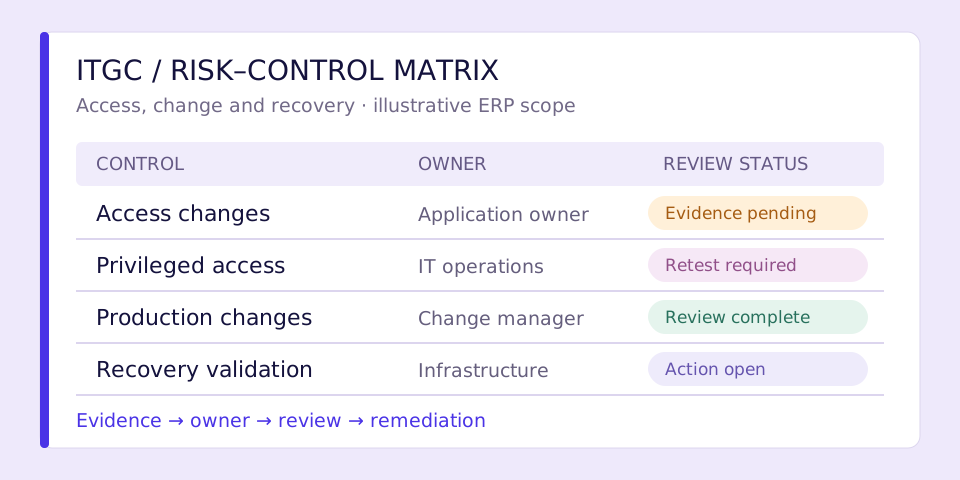
Connect risks to controls, owners and evidence.
Explore the sample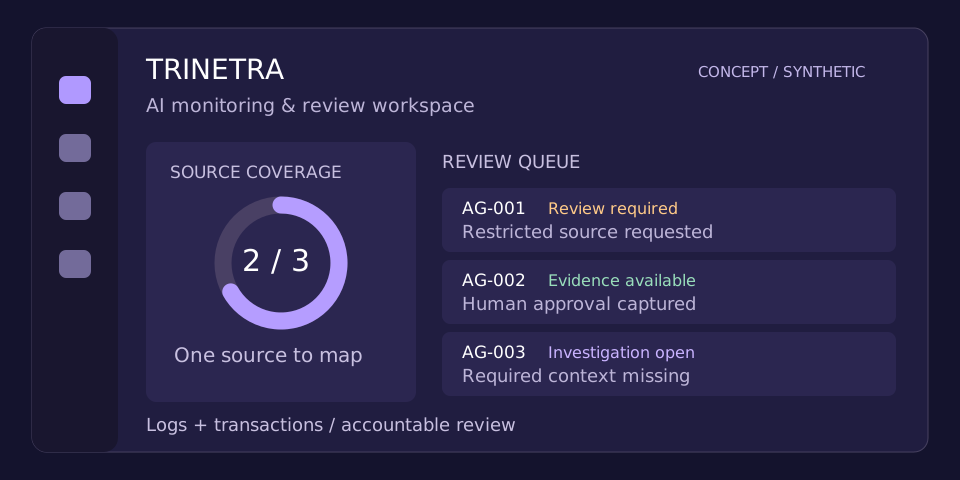
Turn AI logs and exceptions into owned reviews.
Explore the sample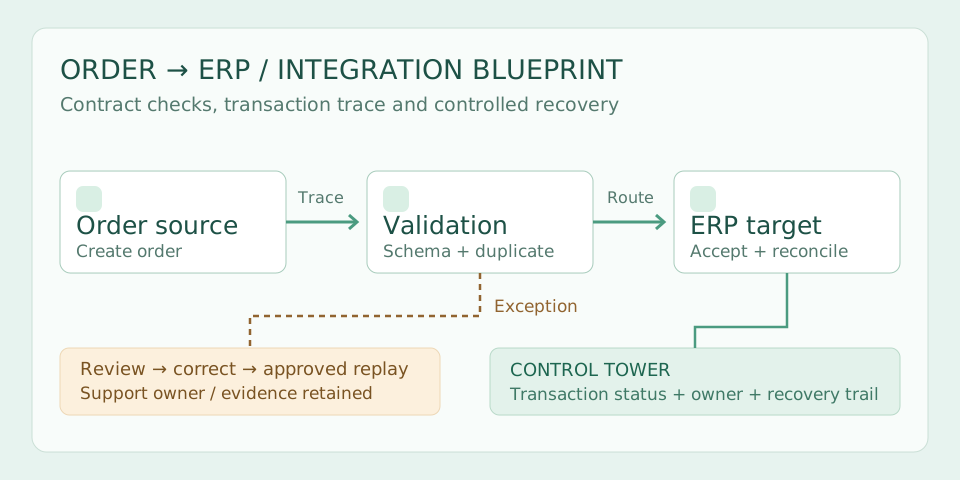
Map system flows, validation and recovery routes.
Explore the sampleA technology choice affects more than the system. Explore the three questions that keep a change plan connected.
Illustrative planning example: improving order visibility.
Agree which service problem the business needs to resolve and what better visibility would make possible.
Map the order handoffs. Define who updates the status, resolves an issue and communicates the next step.
Identify the relevant systems and data sources. Agree the status definitions, access and update requirements.
The right approach depends on your workflows, service expectations and operating constraints. Start with the questions that matter in your context.
A working demonstration answers only part of the question. Examine the ownership, data, controls and adoption decisions needed for wider use.
Read the articlePlatform decisions affect cost, service and the ability to change. Make the business outcome, full effort and operating responsibilities explicit.
Read the articleDelayed decisions and repeated handoffs can survive a platform change. Examine ownership, escalation and the way teams work before selecting the solution.
Read the articleStart with the business priority, the constraints you face and the decisions worth addressing together.
Discuss your priorities